25-November-2026
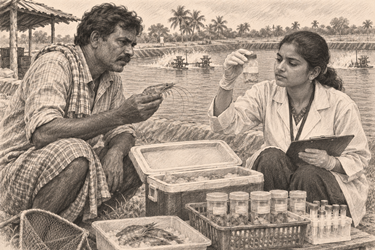
Andhra Pradesh’s shrimp farms are central to India’s seafood exports. An October analysis in The New Indian Express put the state’s FY2025–26 seafood export value at about ₹23,765 crore. MPEDA’s pre-harvest testing programme screens shrimp for specified banned antibiotic residues, including for consignments intended for the European Union. The practical question is whether a farmer can obtain the required sampling and result in time to plan a compliant harvest.
A shrimp crop is perishable, and harvest decisions involve buyers, transport and processing arrangements. A test result must correspond to the identified farm and sample. If the sampling schedule or status is unclear, a farmer may have difficulty coordinating the next step. Clear communication is part of the quality-assurance system.
MPEDA and Andhra Pradesh’s fisheries authorities should review the service from test request through sampling and result communication. Publish the information farmers need before requesting a visit and explain the available status updates. Laboratories should identify periods of concentrated demand so that sampling and analytical capacity can be planned accordingly.
Exporters and processors should communicate destination requirements early enough for farmers to prepare. Preserve the link between farm identification, the sampled crop and the material purchased. Where a screening result requires confirmation, explain the procedure through qualified staff and give the farmer a clear contact. Advice on animal health and inputs must come from competent professionals.
State reviews should examine turnaround times, missed sampling appointments and documentation problems alongside export totals. Work with farmer groups to correct recurring gaps and assess whether the service reaches smaller farms. Andhra’s export strength depends on dependable quality across the production chain. A testing process farmers can understand and schedule will help protect both market access and the value of the harvest.